 English
 Chinese
 Pусский
 Español
Yes—when the contact is designed as a composite rivet with a silver working layer bonded to a hollow brass shank. A Silver Rivet Contact in this configuration uses the brass body for mechanical strength and the hollow shank for a permanent mechanical lock during riveting. This article explains how the hollow shank expands into the base material, what the silver layer contributes to contact resistance, and what to verify when you're specifying a riveted contact for a switch, relay, or contactor.
How Does a Hollow Shank Create a Mechanical Lock?
Expansion During Riveting
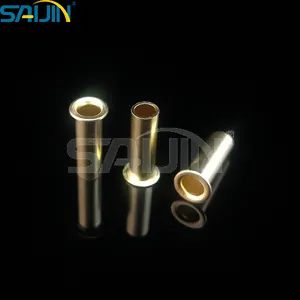
A hollow shank has a partial cavity at the rivet end. When the rivet is pressed into the base material, the shank deforms and expands outward, creating a mechanical interlock that resists pull-out and vibration. A solid shank relies on deforming the base material or a separate staking operation. The hollow design provides a more reliable, repeatable lock without additional operations.
That expansion is what holds the contact in place through thermal cycling and repeated actuation. In relays and contactors, the contact experiences constant mechanical movement. A riveted connection with a hollow shank maintains its grip under that movement, so the contact stays in position over hundreds of thousands of operations.
No Welding or Soldering Required
The expansion of the hollow shank creates a permanent grip inside the terminal or base component. This eliminates the need for welding or soldering at the contact interface, simplifying assembly and reducing the risk of heat damage to surrounding components. For a production line that rivets hundreds of contacts per shift, that elimination of a thermal process is a direct throughput gain.
What Does the Silver Layer Contribute?
Low Resistance and Arc Resistance
The silver layer provides a low-resistance contact surface that remains stable over time. Silver resists welding and arcing, preventing the contacts from fusing together or eroding prematurely under switching loads. Unlike materials that oxidize and increase resistance, silver maintains its conductivity, ensuring consistent electrical performance throughout the component's life.
Copper or Brass Base for Mechanical Strength
The base material—copper or brass—provides the mechanical strength to withstand the riveting process and the actuation forces during switching. The base also conducts heat away from the contact point, helping to manage temperature rise during operation. A silver contact rivet is a composite component where the silver layer is bonded to the copper or brass body, combining the conductivity of silver with the mechanical strength and lower cost of the base metal.
| Parameter | Specification |
|---|---|
| Working layer | Ag, FAg, AgNi, AgCdO, AgSnO2, AgZnO2 |
| Base material | Copper, Brass |
| Head diameter | 2.5–8mm |
| Head thickness | 0.6–4mm |
| Silver layer thickness | 0.3–0.7mm |
| Shank diameter | 1.2–3.5mm |
| Shank length | 0.8–5.0mm |
| Head diameter tolerance | ±0.10mm |
| Head thickness tolerance | ±0.05mm |
| Shank diameter tolerance | -0.02/-0.10mm |
| Shank length tolerance | ±0.15mm |
| Compliance | RoHS, REACH |
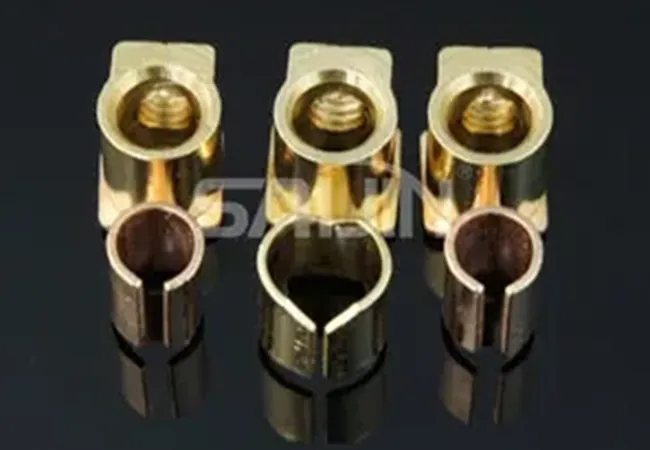
Where Do Hollow Brass Rivet Contacts Fit in Electrical Devices?
A Silver Rivet Contact with a hollow brass body is used in switches, relays, contactors, thermostats, circuit breakers, and other low and medium voltage electrical appliances—including automotive electrical equipment and household appliances. The common thread is a contact that has to be mechanically secured to a terminal or base component and then survive repeated make-and-break cycles without welding or drifting in resistance.
The hollow shank is particularly useful where the assembly requires a permanent lock without a thermal joining process. A relay contact that is riveted rather than welded avoids the heat-affected zone around the contact, which can distort thin terminals or damage adjacent insulation.
What Should You Verify Before Specifying a Hollow Rivet Contact?
How do I match the shank dimensions to the base material?
The shank diameter range is 1.2–3.5mm, and the shank length range is 0.8–5.0mm. Match the shank to the hole in the base material and the thickness of the terminal stack. A shank that's too short won't protrude enough to form a proper expansion; one that's too long can bottom out before the head seats. Confirm the hole diameter and the stack thickness against the shank tolerance before ordering.
What silver alloy should I use for my switching load?
The working layer options include Ag, FAg, AgNi, AgCdO, AgSnO2, and AgZnO2. Pure silver (Ag) offers the highest conductivity for low to medium loads. AgNi provides better arc erosion resistance for frequent switching. AgSnO2 is the cadmium-free option for higher-current applications. AgCdO provides strong welding resistance for demanding loads. Match the alloy to the load current and the expected number of operations.
What tolerance matters most for riveting?
The shank diameter tolerance (-0.02/-0.10mm) and the shank length tolerance (±0.15mm) determine whether the rivet deforms predictably during staking. A shank that's oversized may not fit the hole; one that's undersized may not expand enough to lock. The head diameter (±0.10mm) and head thickness (±0.05mm) tolerances affect the contact alignment and the available silver surface.
Straight Answers on Hollow Brass Rivet Contacts
What's the difference between a hollow and a semi-hollow shank?
A hollow shank has a cavity that extends through a significant portion of the shank length. A semi-hollow shank has a partial cavity at the rivet end. Both designs expand during riveting to create a mechanical lock. The semi-hollow design is often used where a balance between expansion and column strength is needed.
Why use brass instead of copper for the body?
Brass offers good electrical conductivity and better mechanical strength than pure copper. The brass body withstands the riveting force without deforming excessively, and it provides a stable base for the silver layer. Copper is used where higher conductivity is the priority; brass is used where strength and cost balance are the priority.
Can the contact be reworked or re-riveted?
A riveted contact that has been expanded is permanently deformed. Removing it damages the shank and the base material. The contact should be replaced, not re-riveted. The hollow shank is designed for a single, permanent assembly operation.
What compliance standards apply?
The contact rivets are RoHS and REACH compliant. The silver layer and the brass body are selected to meet those substance restrictions, which matters for electrical components sold into European and North American markets.
Let's Match a Hollow Rivet Contact to Your Assembly
Share Your Current, Base Material, and Riveting Process
A Silver Rivet Contact with a hollow brass shank should match your switching current, base material thickness, and riveting equipment—not the other way around. The hollow brass rivet range covers silver, FAg, AgNi, AgCdO, AgSnO2, and AgZnO2 working layers on copper or brass bodies, with 2.5–8mm head diameters and 1.2–3.5mm shank diameters, all RoHS and REACH compliant. If you're specifying a riveted contact for a switch, relay, or contactor, send us your current, base material, and riveting process — we'll help you confirm the right alloy and shank dimensions before you order.