 English
 Chinese
 Pусский
 Español
The alloy choice for a Hardware Fasteners spring contact determines whether the socket holds its clamping force through a few hundred insertions or millions. Phosphor bronze offers a balance of spring properties and cost, while beryllium copper delivers the fatigue resistance needed for high-cycle applications. This article explains how the spring geometry generates contact pressure, which copper alloys deliver the best balance of conductivity and fatigue resistance, and what to verify when you're specifying a socket contact for a switch, relay, or connector assembly.
How Does the Spring Geometry Generate Contact Pressure?
Deflection and Elastic Recovery
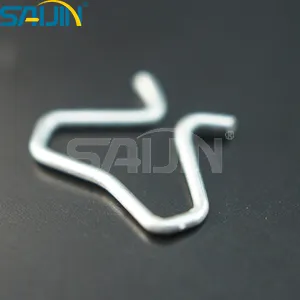
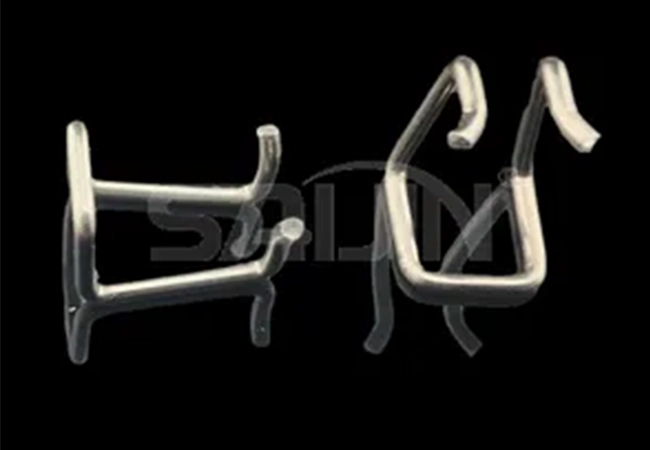
A socket spring contact is designed to deflect when the plug pin enters. The deflection is elastic—the material bends within its elastic range but does not permanently deform. When the pin is inserted, the spring pushes back against it, creating a clamping force proportional to the amount of deflection and the material's stiffness.
The geometry determines the spring rate. A longer, thinner spring arm deflects more easily and generates lower force for a given insertion depth. A shorter, thicker arm generates higher force but makes insertion harder. The stamping die controls that geometry to tight tolerances, so every contact in a production lot produces the same clamping force.
Why Contact Pressure Matters
Contact pressure determines contact resistance. Higher pressure means lower resistance, because the asperities on the two metal surfaces deform and create more conductive contact area. But too much pressure makes insertion difficult and accelerates wear on the plating. The spring element has to be designed to provide enough pressure for low resistance without compromising the user's ability to insert and remove the plug.
The socket spring contact from Saijin addresses that balance with precision stamping that holds the spring geometry to tight tolerances, so the clamping force stays consistent across millions of parts.
Which Copper Alloys Deliver the Best Spring Performance?
Phosphor Bronze vs. Beryllium Copper
The material choice determines how the spring behaves over its service life. Phosphor bronze offers good spring properties and fatigue resistance at a moderate cost. It's the standard choice for medium-cycle sockets, switches, and relays where the contact is inserted and removed a few thousand times over its life.
Beryllium copper delivers the highest spring strength and fatigue resistance, but at a higher cost. It can be deflected millions of times without losing its spring properties, which makes it the material for test sockets, modular connectors, and field-serviceable equipment where the contact cycles frequently.
| Material | Conductivity | Spring Properties | Fatigue Resistance | Typical Application |
| Brass | Good | Moderate | Moderate | General-purpose sockets, low-cycle |
| Copper | Excellent | Low | Low | High-conductivity power sockets |
| Phosphor Bronze | Good | Good | Good | Medium-cycle sockets, switches, relays |
| Beryllium Copper | Moderate | Excellent | Excellent | High-cycle test sockets, critical connections |
What Contact Resistance Target Should You Specify?
The 30 mΩ Benchmark
A properly designed socket spring contact holds contact resistance in the range of 30 mΩ or lower. That figure is the practical target for signal and low-power connections where voltage drop and heat generation must stay under control.
The resistance depends on three factors: the contact pressure, the surface finish, and the plating material. A gold-plated contact resists oxidation and maintains a stable interface. A silver-plated contact offers lower initial resistance but can tarnish over time. The plating choice follows the environment and the expected mating cycles.
Why Spring Force Drops Over Time
A spring contact that loses tension will see its contact resistance climb. The pin no longer seats tightly, the contact area shrinks, and the resistance rises. In a poorly made socket, that sequence leads to arcing, heat, and eventual failure. The root cause is usually material fatigue or stress relaxation—the spring was deflected beyond its elastic limit, or the alloy was not specified for the cycle count.
Phosphor bronze and beryllium copper resist stress relaxation better than brass or pure copper. For sockets that see frequent insertion and removal, the higher-cost alloy pays for itself in reduced field failures.
Where Do Socket Spring Contacts Fit in Electrical Devices?
Relay Sockets, Switches, and Connectors
The socket spring contact is the interface between a removable plug and a fixed circuit. Relay sockets use spring contacts to hold the relay pins without soldering, so the relay can be replaced in the field. Switches use spring contacts to grip the inserted conductor or plug pin. Connectors use them to maintain signal integrity across repeated mating cycles.
The spring element is what separates a socket contact from a fixed terminal. A fixed terminal is crimped or screwed once and never moves. A socket contact has to maintain pressure through thousands of insertion cycles, which is why the spring geometry and the alloy selection matter so much.
What Should You Verify Before Specifying a Socket Contact?
How do I match the alloy to my cycle count?
Estimate the number of insertion and removal cycles the socket will see over its life. A few hundred cycles is low-cycle duty—brass or phosphor bronze is sufficient. Tens of thousands of cycles requires phosphor bronze or beryllium copper. Millions of cycles requires beryllium copper. The cost difference between the alloys is small compared to the cost of a field failure.
What contact resistance target applies to my circuit?
For signal-level circuits, a contact resistance of 30 mΩ or lower is the target. For power circuits, the resistance has to be lower to keep the voltage drop and heat generation within limits. The plating material, the contact pressure, and the contact area all contribute to the final resistance.
What dimensional tolerances matter?
The spring geometry is defined by the stamping die. The width of the spring arm, the thickness of the material, and the bend radius all affect the spring rate. A tolerance of ±0.01mm on those dimensions keeps the clamping force consistent from part to part. Confirm the tolerance on the spring-critical dimensions before accepting a production lot.
What quality checks should the supplier perform?
The supplier should verify material composition, hardness, and spring force on a sample basis. Dimensional inspection with a projector or CMM confirms the geometry. A spring force test confirms that the contact generates the specified clamping force after stamping. The combination of those checks is what separates a reliable production lot from one that fails in the field.
Straight Answers on Socket Spring Contacts
What's the difference between a socket spring contact and a standard terminal?
A standard terminal makes a permanent connection—the wire is crimped or screwed in place and doesn't move. A socket spring contact makes a removable connection. The spring element deflects when the plug pin is inserted, and that deflection creates the clamping force that maintains contact pressure across repeated cycles.
Why does the spring force drop over time?
Spring force drops when the material is stressed beyond its elastic range or when the alloy has poor fatigue resistance. Brass and pure copper are more susceptible to stress relaxation than phosphor bronze or beryllium copper. If the socket will see frequent insertion and removal, specify the higher-fatigue-resistance alloy.
Can the spring contact be customized for a specific pin diameter?
Yes. The spring geometry is defined by the stamping die, and the die can be designed to match a specific plug pin diameter and insertion force. The contact can also be customized in material, plating, and thickness to meet the mechanical and electrical requirements of the application.
What plating works best for a socket spring contact?
Gold plating offers the most stable contact resistance because it resists oxidation and maintains a clean interface over time. Silver plating provides lower initial resistance but can tarnish in humid or sulfur-containing environments. Nickel plating is often used as a barrier layer under gold or silver. The plating choice follows the environment and the expected number of mating cycles.
Let's Match a Socket Spring Contact to Your Design
Share Your Pin Diameter, Cycle Count, and Resistance Target
A Hardware Fasteners spring element like the socket spring contact should match your plug pin diameter, insertion cycle count, and contact resistance target—not the other way around. The socket spring contact from Saijin uses precision-stamped phosphor bronze, brass, or beryllium copper spring geometry to maintain consistent clamping force across thousands of insertion cycles, with contact resistance targets in the 30 mΩ range and dimensional tolerances held to ±0.01mm on spring-critical features. If you're specifying a socket contact for a relay socket, switch, or connector assembly, send us your pin diameter and cycle requirements — we'll help you confirm the right alloy and spring geometry before you order.