 English
 Chinese
 Pусский
 Español
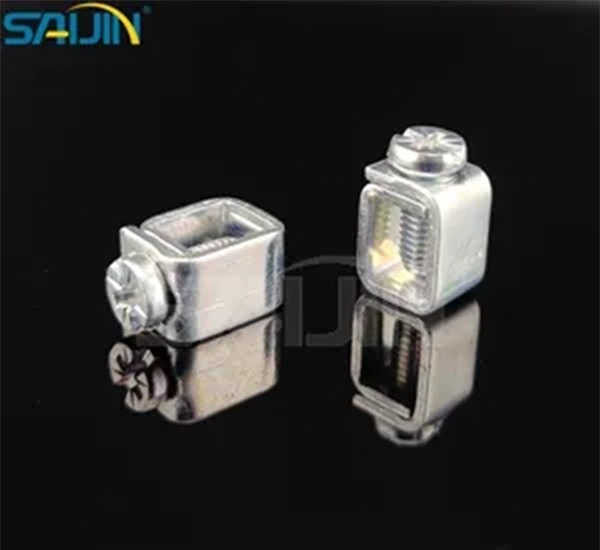
You're assembling a circuit breaker or an energy meter, and the connection point needs to hold a conductor securely under vibration, thermal cycling, and repeated actuation. A Terminals solution with a steel terminal cage clamps the wire through spring pressure or screw-driven compression—no separate crimp terminal required. The steel cage terminal from Saijin is designed around this principle, using zinc-plated carbon steel to form a cage that grips the conductor directly. This article explains how the cage mechanism works, what materials and finishes are available, and what to verify before specifying cage terminals for your electrical assembly.
How Does a Cage Terminal Clamp Without a Separate Lug?
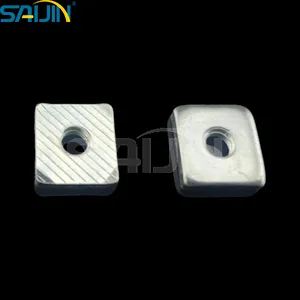
A cage terminal uses a cage-shaped steel component that surrounds the conductor and compresses it against a current-carrying bar or terminal block. The cage is driven by a screw or spring mechanism. When tightened, the cage deforms slightly and applies uniform pressure around the conductor, creating a gas-tight connection. Unlike a crimp terminal, the cage terminal does not require a separate lug or crimping tool. The conductor is inserted directly into the cage, and the screw or spring secures it in place. The steel terminal cage is developed to replace expensive brass terminals, offering small size, low cost, simple assembly, and easy fixing .
Screw-Driven vs. Spring-Cage Mechanism
Screw-driven cage terminals use a screw to compress the cage against the conductor. Spring-cage terminals use a spring-loaded mechanism that maintains constant pressure without a screw. Both designs provide secure clamping, but spring-cage terminals are faster to wire and maintain consistent pressure over time.
Direct Conductor Insertion
The cage terminal accepts bare copper wire directly, eliminating the need for a crimped lug. The wire is inserted into the cage opening, and the clamping mechanism secures it. This simplifies assembly and reduces the number of components in the connection.
What Materials and Finishes Are Used for Terminal Cages?
Steel terminal cages are typically made from carbon steel and finished with zinc plating to resist corrosion. The zinc plating provides a barrier against moisture and oxidation, extending the service life of the terminal in humid or industrial environments. The steel sheet thickness varies with the current rating: 0.8mm for 20A terminals, 1.2mm for 40A, 1.5mm for 60-120A, and 2.0mm for 150A and above . This thickness progression ensures that the cage has sufficient mechanical strength to clamp larger conductors without deformation.
| Rated Current | Screw | Steel Sheet Thickness | Width×Height | Torque |
|---|---|---|---|---|
| 20A | M3 | 0.8mm | 3.6×1.2mm² | ≥0.8 Nm |
| 40A | M4 | 1.2mm | 5.5×6.5mm² | ≥1.5 Nm |
| 60-80A | M5 | 1.5mm | 7.5×9, 8×10mm² | ≥2.5 Nm |
| 100-120A | M6 | 1.5/2.0mm | 8×12mm² | ≥3 Nm |
| ≥150A | M8 | 2.0mm | 10×14mm² | ≥5 Nm |
Zinc Plating for Corrosion Resistance
The cage terminal is made from carbon steel sheet and then zinc plated. The zinc coating protects the steel from rust and oxidation, which is essential for long-term reliability in electrical equipment. The salty spray test rating of 48-72 hours confirms the corrosion resistance of the finish .
Screw and Accessory Compatibility
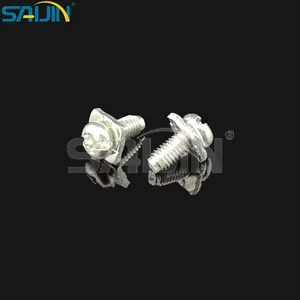
The cage terminal is used with matching screws, also made from carbon steel and zinc plated. Flat washers and spring washers are available as accessories to distribute load and maintain clamping force .
What Wire Sizes and Torque Specifications Apply?
The cage terminal accepts a range of conductor sizes depending on the current rating. For a 63-250A terminal, the wire range is 16-185mm² for both flexible and rigid conductors. For a 400A terminal, the range extends to 50-300mm². The tightening torque is specified to ensure a secure connection without damaging the conductor or stripping the screw .
Matching Wire Size to Current Rating
The wire range must match the terminal's current rating. Undersized wire will not fill the cage properly, leading to a loose connection. Oversized wire may not fit or may require excessive torque to clamp.
Torque Control for Reliable Connections
The torque specification (ranging from ≥0.8 Nm for 20A to ≥5 Nm for 150A) ensures that the cage applies sufficient pressure to create a gas-tight connection. Under-torquing leads to loose connections and overheating; over-torquing can strip threads or damage the conductor.
Where Do Steel Cage Terminals Deliver the Most Value?
Steel cage terminals are widely used in electrical devices where reliable, low-cost connections are required. The cage terminal is developed to replace expensive brass terminals, offering small size, low cost, simple assembly, and easy fixing . Applications include circuit breakers, energy meters, DIN rail meters, and other electrical equipment.
-
Circuit breakers — clamping conductors to the breaker terminals
-
Energy meters — connection points for current and voltage circuits
-
DIN rail meters — terminal connections in modular metering equipment
-
Industrial control systems — wiring connections in control panels and enclosures
-
Power distribution equipment — terminal blocks and busbar connections
[H3] Circuit Breaker and Meter Applications
Circuit breakers and energy meters require secure conductor clamping that maintains low contact resistance over thousands of operations. The steel cage terminal provides this clamping function at a lower cost than brass alternatives .
[H3] Industrial Control and Distribution Panels
Control panels and distribution equipment use cage terminals for wiring connections that must withstand vibration and thermal cycling. The zinc-plated steel construction resists corrosion in industrial environments.
Common Questions About Cage Terminals
[H3] What is the difference between a cage terminal and a screw terminal?
A cage terminal uses a cage-shaped steel element to clamp the conductor, while a standard screw terminal presses the conductor directly against a bar. The cage design distributes pressure more evenly and allows direct conductor insertion without a lug.
[H3] What materials are available for cage terminals?
Standard material is carbon steel with zinc plating. Other options include brass, stainless steel, and aluminum, with finishes such as zinc, nickel, or black plating .
[H3] What wire sizes can the cage terminal accept?
Wire sizes range from 16mm² for lower-current terminals up to 300mm² for high-current applications, depending on the terminal model .
[H3] What maintenance do cage terminals require?
Cage terminals require minimal maintenance. Periodic inspection of the screw torque and visual checks for corrosion or debris are sufficient. The zinc plating protects against rust, and the cage mechanism maintains clamping force over time.
Request a Cage Terminal Configuration for Your Assembly
A Terminals solution with a steel terminal cage clamps conductors securely without a separate crimp lug, simplifying assembly and reducing component count. The Steel terminal cage from Saijin delivers zinc-plated carbon steel construction, wire range compatibility from 16mm² to 300mm², torque ratings from 0.8 Nm to 5 Nm, and applications in circuit breakers, energy meters, and industrial control systems. Contact Saijin for a cage terminal configuration assessment → their team can help you select the right size, material, and finish for your specific electrical assembly.