 English
 Chinese
 Pусский
 Español
You're designing a socket that accepts a plug pin. The pin slides in, but the connection feels loose. It works today, but after a hundred insertions, the contact resistance climbs and the signal degrades. A Hardware Fasteners component with spring tension solves this problem by maintaining constant clamping force on the pin. The socket part spring holder from Saijin uses precision-stamped spring elements to grip plug pins with consistent tension, ensuring reliable electrical contact through thousands of insertion cycles. This article explains how spring tension works in socket applications, what materials deliver the best combination of conductivity and fatigue resistance, and what to verify before specifying socket stamping parts for your assembly.
What Makes a Socket Stamping Part Different From a Standard Terminal?
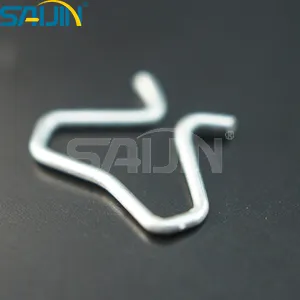
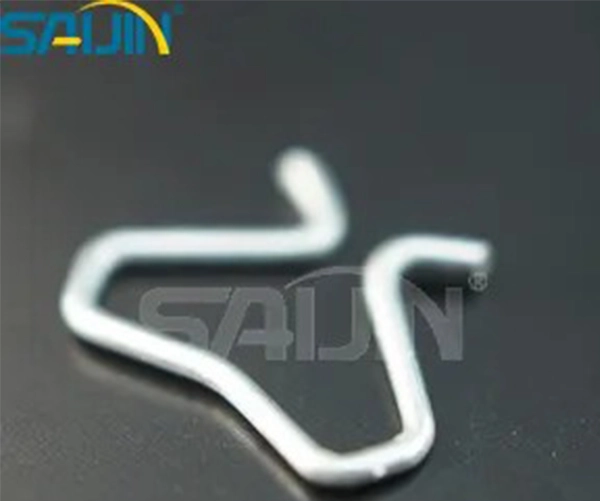
A standard terminal makes a fixed connection — the wire is crimped or screwed in place, and the connection doesn't change. A socket stamping part makes a removable connection. The plug pin slides in and out, and the socket must maintain contact pressure across thousands of cycles. The spring tension element is what makes this possible. In a socket with spring tension, the contact element is shaped to deflect when the pin is inserted. The deflection creates a clamping force that presses the contact against the pin. As long as the spring element stays within its elastic range, the force remains consistent. The challenge is designing the spring element so it doesn't fatigue, deform permanently, or lose tension over time. The socket part spring holder from Saijin addresses this with precision stamping and material selection.
The Difference Between Fixed and Removable Connections
A fixed connection is permanent. A removable connection requires a spring element that maintains force over repeated cycles. The socket part spring holder is designed for the removable connection — it clamps onto plug pins with spring tension and withstands years of insertion and removal without fatigue.
How Spring Tension Maintains Contact Pressure
Contact pressure determines contact resistance. Higher pressure means lower resistance. But too much pressure makes insertion difficult and wears the plating. The spring element must be designed to provide enough pressure for low resistance without making insertion or removal difficult. The precision stamping process allows the spring geometry to be controlled to tight tolerances, ensuring consistent performance across every part.
Which Materials Deliver the Best Spring and Conductivity Balance?
Socket stamping parts are made from copper alloys selected for their combination of electrical conductivity, spring properties, and corrosion resistance. Saijin's socket stamping parts use materials such as copper, brass, phosphorus bronze, and beryllium copper, each selected based on the required conductivity and spring characteristics. Brass offers good conductivity and formability at a moderate cost. Phosphor bronze provides better spring properties and fatigue resistance. Beryllium copper delivers the highest spring strength and fatigue resistance but at a higher cost.
| Material | Conductivity | Spring Properties | Typical Application |
|---|---|---|---|
| Brass | Good | Moderate | General-purpose sockets, low-cycle applications |
| Copper | Excellent | Low | High-conductivity sockets, power applications |
| Phosphor Bronze | Good | Good | Medium-cycle sockets, switches |
| Beryllium Copper | Moderate | Excellent | High-cycle sockets, critical connections |
Why Beryllium Copper Excels in High-Cycle Applications
Beryllium copper combines high strength with excellent fatigue resistance. It can be deflected millions of times without losing its spring properties. For sockets that undergo frequent insertion and removal — test sockets, modular connectors, and field-serviceable equipment — beryllium copper provides the longest service life.
Phosphor Bronze for Cost-Sensitive Applications
Phosphor bronze offers a balance of spring properties and cost. It provides good fatigue resistance at a lower price point than beryllium copper. For sockets that see moderate cycling — consumer electronics, appliance connectors, and general-purpose switches — phosphor bronze is often the practical choice.
Socket Part Spring Holder Specifications
| Parameter | Specification |
|---|---|
| Material Options | Copper, brass, phosphor bronze, beryllium copper |
| Tolerance | ±0.05mm |
| Contact Resistance | ≤1.5mΩ (oxygen-free copper base) |
| Contact Resistance (Relay) | ≤1.2mΩ at 50A load |
| Surface Treatment | Plating options available |
| Customization | Available per customer drawings |
Precision Tolerances for Consistent Insertion Force
The ±0.05mm tolerance on socket stamping parts ensures that every part in a production run has the same spring geometry. This consistency translates to uniform insertion force and contact resistance across all sockets in an assembly. Without tight tolerances, some sockets would grip too tightly and others too loosely.
Contact Resistance and Current Capacity
The contact resistance of ≤1.5mΩ (oxygen-free copper base) or ≤1.2mΩ at 50A load (relay applications) minimizes voltage drop and heat generation. Low contact resistance is critical for power applications where even small resistance increases can cause significant heating.
Where Do Spring-Loaded Socket Parts Deliver the Most Value?
Socket part spring holders are used in any application where a removable electrical connection must maintain reliable contact over repeated cycles. Switches, relays, connectors, and test sockets all rely on spring tension to grip plug pins or mating contacts.
-
Switches — button switches, toggle switches, and rotary switches use spring-loaded sockets for removable connections
-
Relays — relay sockets and terminal blocks use spring tension to secure relay pins
-
Connectors — modular connectors and plug-and-socket assemblies rely on spring elements for retention
-
Test sockets — burn-in sockets and test fixtures require high-cycle spring elements that maintain contact through thousands of insertions
-
Power distribution — industrial power connectors use spring-loaded contacts for high-current removable connections
Switches and Relays
Switches and relays use spring-loaded sockets to secure removable components. The spring tension ensures that the connection remains stable under vibration and thermal cycling. The precision stamping process delivers consistent insertion force and contact resistance across every part.
Test Sockets and High-Cycle Applications
Test sockets for integrated circuits and burn-in fixtures require spring elements that can withstand thousands of insertion cycles without losing tension. Beryllium copper and phosphor bronze are the preferred materials for these applications due to their fatigue resistance.
Answers to Common Questions About Socket Stamping Parts
How do I choose the right material for my socket application?
The material choice depends on the required cycle life, conductivity, and cost target. Brass is suitable for low-cycle, cost-sensitive applications. Phosphor bronze provides better spring properties for medium-cycle use. Beryllium copper delivers the highest fatigue resistance for high-cycle test sockets and critical connections.
What tolerances can be achieved with precision stamping?
Socket stamping parts from Saijin are manufactured to tolerances of ±0.05mm. This precision ensures consistent spring geometry and insertion force across the production run. Tighter tolerances are available for critical applications on request.
How is contact resistance controlled in a removable connection?
Contact resistance depends on contact pressure and surface condition. The spring element provides the pressure, and the surface plating prevents oxidation. The socket part spring holder is designed to maintain pressure within the elastic range of the spring material, ensuring stable contact resistance over the rated cycle life.
Can socket stamping parts be customized for specific plug pin dimensions?
Yes. Saijin offers customization based on customer drawings. Socket dimensions, spring geometry, material selection, and plating can all be adjusted to match specific plug pin sizes and insertion force requirements.
Request a Socket Stamping Part Configuration for Your Assembly
A Hardware Fasteners solution with precision-stamped spring tension elements in brass, copper, phosphor bronze, or beryllium copper is the practical choice for removable electrical connections that must maintain reliable contact over thousands of cycles. The socket part spring holder from Saijin delivers ±0.05mm tolerance, ≤1.5mΩ contact resistance (oxygen-free copper base), ≤1.2mΩ at 50A load for relay applications, and customization per customer drawings.
Whether you're designing switches, relays, connectors, or test sockets, this spring-loaded socket component offers the contact reliability and fatigue resistance that removable connections demand. With material options ranging from cost-effective brass to high-performance beryllium copper, it adapts to your specific cycle life and conductivity requirements.
Contact Saijin for a socket stamping part configuration assessment → their team can help you select the right material, spring geometry, and plating for your specific plug pin dimensions and insertion force requirements. Get a Hardware Fasteners solution that grips the pin with consistent tension — so your connections stay reliable through every insertion cycle.