 English
 Chinese
 Pусский
 Español
You're specifying electrical connections for a battery pack, a power distribution unit, or a renewable energy system. The terminal is the junction where current flows from one component to another — and if that junction fails, the entire system fails. A terminals component might seem simple, but its material, plating, and construction determine whether the connection lasts for years or fails under load. Saijin's high-current terminals employ oxygen-free copper with precision stamping, achieving resistance as low as ≤1.2mΩ and supporting 50A continuous load capacity. This guide covers what makes a terminal reliable for demanding applications — from material selection and key specifications to quality assurance and application fit.
The Critical Junction – Where Current Flows and Connections Hold
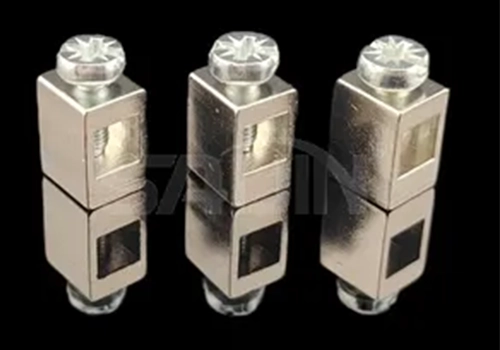
A terminal is the interface between a wire and an electrical component — a battery, a busbar, a circuit breaker, or a motor. It provides a secure mechanical connection and a low-resistance electrical path. In high-current applications, the terminal must carry significant current without overheating, maintain stable contact resistance over time, and withstand vibration, thermal cycling, and environmental exposure. The Saijin terminal is engineered for exactly these demands, with oxygen-free copper providing excellent conductivity and tin plating ensuring corrosion resistance.
The Mechanical Connection
The terminal is crimped or soldered onto the wire, creating a mechanical bond that is as important as the electrical one. A poorly terminated connection can loosen, overheat, and fail. The precision stamping process ensures consistent dimensions and reliable crimping.
The Electrical Path
The terminal's resistance determines how much heat is generated during current flow. Lower resistance means less heat, higher efficiency, and longer component life. The ≤1.2mΩ resistance of Saijin's terminals ensures minimal power loss at the connection point.
Oxygen-Free Copper, Tin Plating, and UL94-V0 – The Material Trio That Defines Performance
The material of a terminal determines its conductivity, corrosion resistance, and durability. Saijin's terminals use oxygen-free copper, which offers higher conductivity than standard copper due to the absence of oxygen impurities that can cause embrittlement and reduce performance. The tin plating (≥3μm) provides a barrier against oxidation and corrosion, ensuring that the connection remains low-resistance over years of service. Tin plating is particularly important in humid or chemically active environments where bare copper would tarnish and degrade. The terminal also meets UL94-V0 flame rating, ensuring that the material self-extinguishes in the event of a fire.
Why Oxygen-Free Copper Matters
Oxygen-free copper is refined to remove oxygen and other impurities, resulting in a material with higher conductivity and better ductility. This makes it ideal for terminals that must carry high currents without overheating and must deform during crimping without cracking.
The Role of Tin Plating in Corrosion Protection
Tin plating provides a sacrificial layer that oxidizes instead of the copper beneath. This prevents the formation of copper oxide, which is a poor conductor and can increase contact resistance over time. The ≥3μm thickness ensures long-term protection even in challenging environments.
≤1.2mΩ, 50A Continuous, and 3μm Plating – The Specs That Matter
The electrical and mechanical specifications of a terminal determine its suitability for your application. Saijin's terminals offer several key specifications that define their performance envelope:
| Specification | Value | Why It Matters |
|---|---|---|
| Contact resistance | ≤1.2mΩ | Minimizes power loss and heat generation |
| Continuous current | 50A | Supports high-power applications |
| Tin plating thickness | ≥3μm (5μm optional) | Corrosion resistance in harsh environments |
| Flame rating | UL94-V0 | Fire safety compliance |
| Dimensional repeatability | 0.005mm | Consistent fit and performance |
| Defect rate | <0.1% | Quality and reliability |
Contact Resistance and Heat Generation
The ≤1.2mΩ contact resistance ensures that the terminal does not become a source of heat in the circuit. At 50A, this resistance generates only about 3 watts of heat per terminal — a negligible amount that does not affect system performance.
Plating Thickness Options
The standard ≥3μm tin plating provides excellent corrosion protection for most applications. For extreme environments — high humidity, salt spray, or chemical exposure — an optional 5μm plating is available for additional protection.
From EV Battery Packs to Renewable Energy – Where Reliable Terminals Are Essential
High-current terminals are used across a growing range of industries and applications where reliable power connections are critical. In electric vehicles, terminals are used in battery pack interconnects, power distribution units, and charging systems — where high current and vibration resistance are essential. In renewable energy systems, solar inverters, wind turbine converters, and energy storage solutions require terminals that can handle high currents in outdoor environments. In power distribution, industrial switchgear, busbars, and control panels use terminals for reliable, low-resistance connections.
EV and Automotive Applications
Saijin's terminals are designed to meet automotive-grade reliability standards, with production systems certified to IATF 16949. This makes them suitable for the demanding requirements of electric vehicle battery systems and charging infrastructure.
Renewable Energy and Industrial Applications
Solar inverters and wind turbine systems operate in demanding outdoor environments where corrosion resistance and thermal performance are critical. The tin plating and oxygen-free copper construction provide the durability needed for these applications.
Precision Stamping, 0.005mm Repeatability, and 100% Inspection – The Quality Behind Every Terminal
The quality of a terminal depends on the precision of its manufacturing. Saijin's terminals are produced through precision stamping — a process that creates consistent, repeatable dimensions across millions of parts. The dimensional repeatability is maintained at 0.005mm through CNC machining centers and automated optical measurement systems. Every terminal undergoes 100% inspection using automated inspection equipment with optical 3D measurement and electrical testing. This ensures that every terminal meets specifications, with a defect rate below 0.1%.
Precision Stamping for Consistent Quality
Stamping is a high-speed manufacturing process that produces consistent parts with tight tolerances. The precision stamping process ensures that each terminal has the same dimensions, ensuring reliable crimping and consistent electrical performance.
100% Inspection and Quality Control
The automated inspection equipment checks every terminal for dimensional accuracy and electrical performance. This ensures that defective parts are identified and removed before they reach the customer, maintaining a defect rate below 0.1%.
What Engineers Ask About High-Performance Terminals
What is the maximum current capacity of these terminals?
Saijin's high-current terminals support 50A continuous load capacity, making them suitable for EV battery packs, power distribution units, and renewable energy systems.
What material is used in the terminal construction?
The terminals are made from oxygen-free copper with tin plating (≥3μm). Oxygen-free copper provides excellent conductivity, and the tin plating ensures corrosion resistance. The terminals also meet UL94-V0 flame rating.
What is the contact resistance?
The terminals achieve ≤1.2mΩ contact resistance, minimizing power loss and heat generation at the connection point.
What quality certifications are available?
Saijin's production system has passed IATF 16949 certification, and products meet automotive-grade reliability standards. All goods come with a complete material certification package, including RoHS and REACH compliance reports.
What is the typical delivery time?
Standard products are usually shipped within 7-15 working days after order confirmation, with expedited options available for urgent requests.
Match a Terminal to Your Current and Environmental Requirements
Selecting a terminal comes down to three factors: current rating (match your load requirements), material (oxygen-free copper for conductivity, tin plating for corrosion resistance), and plating thickness (standard 3μm for most applications, 5μm for extreme environments). Contact Saijin for technical support and samples → —their team can help you select the right terminal configuration for your specific application.
Saijin (Wenzhou Saijin Electrical Alloy Co., Ltd.) manufactures high-current terminals with oxygen-free copper construction, precision stamping, and tin plating (≥3μm). The terminals achieve ≤1.2mΩ resistance and 50A continuous load capacity, with UL94-V0 flame rating. Dimensional repeatability is maintained at 0.005mm through CNC machining and automated optical measurement, with 100% inspection and a defect rate below 0.1%. Applications include EV battery packs, power distribution units, renewable energy systems, relays, contactors, and switchgear. Saijin provides comprehensive technical support, samples, and after-sales service. Connect with Saijin to discuss your current rating requirements, material specifications, and application conditions.