 English
 Chinese
 Pусский
 Español
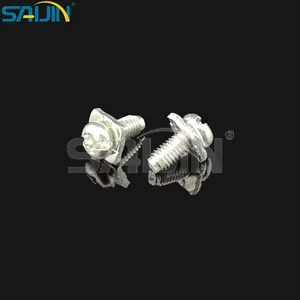
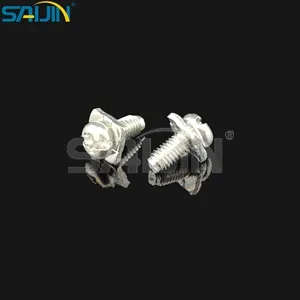
Open the cover of nearly any relay, circuit breaker, or terminal block. Inside, you‘ll find something that looks ordinary but matters enormously: the screw holding the wire in place. A loose screw means a loose connection—heat, arcing, and eventual failure. An Electrical Stamping Parts product, the 5.8 gasket combination screw, solves this with a simple but effective design. Instead of a screw and a separate loose washer, it combines both into one piece. The gasket stays captive on the screw, which means one less part to drop, one less motion on the assembly line, and, most importantly, consistent contact pressure even when the equipment shakes and rattles. This guide explains why that matters, what makes this screw different, and where you will find it in electrical systems.
Why terminal screws fail under vibration
A standard screw works fine when nothing moves. Tighten it and the connection holds. But real equipment—a relay on a factory floor, a circuit breaker in an EV charger, a terminal block in a vehicle—vibrates. Over time, a regular screw can back off. The gasket’s spring tension drops, the contact pressure decreases, and resistance increases. Eventually, the connection overheats or arcs. The 5.8 gasket combination screw uses a captive gasket that compresses under the screw head, storing spring energy that continuously pushes back against the screw threads, resisting loosening. The gasket also spreads clamping force across a wider area, protecting the terminal base from deformation.
What the 5.8 rating tells you
The “5.8” in the name refers to the screw’s mechanical property grade. In fastener standards, “5.8” indicates a tensile strength of 500 MPa and a yield strength ratio of 0.8 (yield strength = 400 MPa), providing sufficient tightening torque without stripping threads. Applications require specific torque—generally 1.0 to 2.5 N·m depending on wire gauge and terminal design. Exceeding this can warp the gasket or strip the threads, while under-tightening fails to compress the gasket enough to maintain spring tension.
Where you‘ll find 5.8 gasket combination screws in the field
These screws are standard in low-voltage electrical components where maintenance-free reliability is expected:
-
Relays — holding the load-side and control-side wiring in place
-
Circuit breakers — securing line and load conductors in smaller breakers
-
Terminal blocks — common in DIN‑rail mounted terminal strips
-
Contactors and timers — where vibration from magnetic chattering matters
-
Thermostats and isolators — wherever a screw terminal is used in low-voltage apparatus
In a typical DIN‑rail terminal block, this screw presses a current bar against the inserted wire. The captive gasket delivers consistent pressure across thousands of terminations, which is why production lines prefer combination screws over loose washers.
Material and finish options
Saijin manufactures 5.8 gasket combination screws in various materials and finishes:
| Material/Finish | Key Property | Typical Application |
|---|---|---|
| Steel with zinc plating | Good corrosion resistance, cost‑effective | General industrial relays, breakers |
| Steel with silver plating (≥1.27μm) | High conductivity, low contact resistance (<2mΩ) | Low‑level signal applications, automotive electronics |
| Copper alloy | Excellent conductivity, corrosion resistant | High‑current terminals |
| Gold plating (≥1.27μm) | Maximum corrosion protection | Low‑level signal applications |
The silver-plated option is essential where screw terminals double as electrical contacts or carry low-level signals. Silver maintains low contact resistance even after repeated tightening cycles, crucial for applications where the screw remains clamped for years.
Precision stamping behind the part
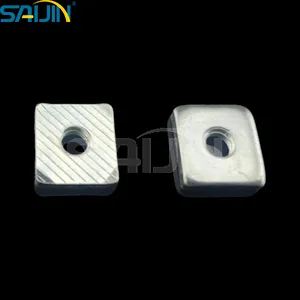
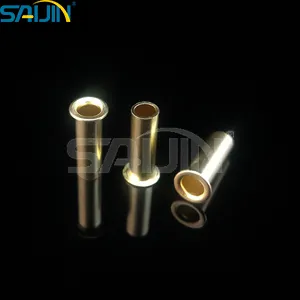
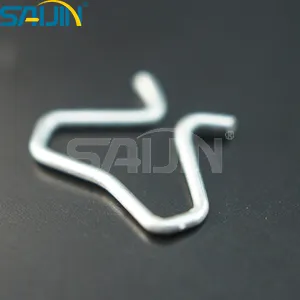
While the 5.8 gasket combination screw is a fastener, its reliability depends on the precision of its components. Saijin‘s Electrical Stamping Parts are fabricated using advanced progressive dies, with dimensional tolerances controlled to ±0.05mm through fully automatic optical inspection. Electrical stamping parts like socket stampings utilize precision progressive dies, with ±0.03mm dimensional accuracy and oxygen‑free copper base maintaining ≤1.5mΩ resistance for high‑current transmission. The stamping process also maintains ±0.05mm tolerance control through fully automatic optical inspection. These processes enable the gasket to be stamped to exact dimensions so it fits the screw perfectly without wobbling.
Why choose a combination screw over separate parts
Assembly speed is a major factor. A worker grabbing a screw and a loose gasket needs two motions, and the gasket can be dropped or misaligned. The 5.8 combination screw integrates both parts into one assembly, eliminating that step entirely. A high-volume relay manufacturer switching from separate screws and washers to combination screws can save seconds per unit, adding up to significant labor reduction. Additionally, a captive gasket cannot be omitted by mistake. Loose washers occasionally missed in assembly can’t happen with a combination screw.
The company behind the screw
The 5.8 Gasket combination screw is manufactured by Saijin (Wenzhou Saijin Electrical Alloy Co., Ltd.), established in 1998 and specializing in precision metal stampings, electrical contacts, and connection components. Saijin holds ISO9001:2015 certification, follows RoHS and REACH material compliance, and maintains IATF 16949 certification for automotive-grade production.
The company’s facility in Wenzhou operates fully automated production lines with in-process optical inspection and electrical performance testing, achieving a defect rate below 0.1%. Annual production capacity exceeds one billion pieces. Saijin serves customers across the automotive electronics, industrial equipment, and new energy sectors.
Questions from design engineers
Q: What is the difference between a 5.8 combination screw and a standard screw with a separate washer? A combination screw uses a captive gasket pre-assembled onto the screw shank, held in place by a retaining feature that prevents it from falling off. The standard screw uses a loose washer that must be handled separately.
Q: What torque should be used when tightening this screw in a terminal block? The recommended torque depends on the terminal design and wire size. General low-voltage applications call for 1.0–2.5 N·m. Consult the specific terminal block datasheet. Over-tightening can distort the gasket and strip the threads.
Q: Does the silver plating wear off with repeated tightening cycles? Silver plating is designed for intermittent tightening during installation and maintenance, not for daily adjustment. Under normal use, silver plating on terminal screws lasts the life of the equipment.
Q: Can the 5.8 gasket combination screw be used in outdoor or wash‑down environments? Standard zinc‑plated steel provides moderate corrosion protection. For outdoor or wet environments, specify stainless steel or a higher-grade plating.
Final thoughts on a small but essential part
Electrical Stamping Parts like the 5.8 gasket combination screw rarely make it into product brochures or marketing materials, but their reliability determines whether a relay, breaker, or terminal block works as intended years after installation. A screw that stays tight and maintains consistent contact pressure separates good equipment from equipment that fails prematurely. With captive gasket design, precision stamping, and silver-plated finish, this small component has a big job.
[Request a quote from Saijin for the 5.8 Gasket combination screw] — Share your terminal or relay application, required torque, target annual volume, and preferred plating. Their technical team can recommend the correct material and finish for your assembly line.