 English
 Chinese
 Pусский
 Español
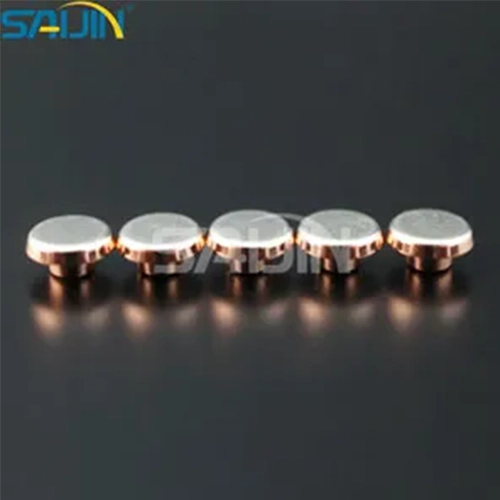
You're specifying contact components for a relay, contactor, or switch, and the material choice isn't just about electrical performance anymore—it's about regulatory compliance, environmental responsibility, and future-proofing your supply chain. A bimetal rivet contact with a silver-tin oxide head offers the performance you need without the regulatory risk of cadmium. AgCdO—silver-cadmium oxide—has been the industry standard for decades, prized for its excellent arc resistance and low contact resistance. But its days are numbered. Global regulations, from the EU's RoHS directive to China RoHS and similar frameworks in Korea, Japan, and California, increasingly restrict the use of cadmium in electrical components. The AgSnO₂In₂O₃/Cu bimetal contact rivets from Saijin were engineered as the answer: the arc erosion resistance and low contact resistance you need, with the compliance and environmental safety regulators demand.
Questions Engineers Ask About Replacing AgCdO
Three Compliance Concerns—Answered Up Front
Q: Why is AgCdO being phased out, and how urgent is the transition?
A: AgCdO contains cadmium, which is restricted under the EU RoHS Directive (cadmium ≤0.01%) and similar regulations in China, Korea, Japan, and California. While some exemptions exist, the regulatory landscape is shifting. AgSnO₂ and AgSnO₂In₂O₃ are recognized as the most ideal environmentally friendly low-voltage contact materials to replace toxic silver cadmium oxide.
Q: Does AgSnO₂In₂O₃ perform as well as AgCdO in real applications?
A: In many cases, it performs better. AgSnO₂In₂O₃ offers excellent arc erosion resistance and low contact resistance for high-frequency switching applications. Studies show that AgSnO₂ materials exhibit lower arc erosion, higher density, and better anti-welding performance than AgCdO under certain conditions. While AgSnO₂'s contact resistance can be slightly higher, modern formulations have largely closed that gap.
Q: Is the transition to AgSnO₂In₂O₃ cost-effective?
A: Yes. The bimetal construction—silver alloy head for performance, copper shank for strength and savings—reduces silver consumption by approximately 30-50% compared to solid silver rivets while maintaining contact resistance below 1mΩ. You're not paying for silver where you don't need it.
The Regulatory Pressure — Why AgCdO Is Being Phased Out
AgCdO has been a workhorse of the electrical contact industry for decades. Its arc-quenching properties made it the default choice for relays, contactors, and switches. But cadmium is a toxic heavy metal—and regulators have taken notice.
Global Restrictions on Cadmium — What They Mean for Your Components
The EU RoHS Directive restricts cadmium to 0.01% (100 ppm) in electrical equipment. Similar regulations exist in China (China RoHS), Korea, Japan, and California. While AgCdO still benefits from some exemptions, the regulatory pressure is intensifying. For OEMs and component suppliers, continuing to use AgCdO means navigating a patchwork of compliance requirements and accepting the risk that exemptions may eventually be revoked.
The Compliance Risk of Continuing to Use AgCdO
The cost of non-compliance can be severe: fines, product recalls, and damage to brand reputation. AgSnO₂In₂O₃ eliminates this risk entirely. It is non-toxic, RoHS-compliant, and REACH-compliant. By switching now, you future-proof your supply chain and avoid the disruption of a forced transition.
AgSnO₂In₂O₃ — The Cadmium-Free Alternative That Performs
AgSnO₂In₂O₃ is a silver-tin oxide material with indium oxide added to enhance its electrical properties. It is recognized as the most ideal environmentally friendly material to replace toxic AgCdO.
Excellent Arc Erosion Resistance — Matching or Exceeding AgCdO
In high-frequency switching applications, arc erosion is the primary wear mechanism. AgSnO₂In₂O₃ offers excellent arc erosion resistance. Studies have shown that AgSnO₂ materials exhibit lower arc erosion and better anti-welding performance than AgCdO under certain conditions. The addition of In₂O₃ further enhances its resistance to material transfer, making it particularly suitable for DC applications.
Low Contact Resistance — Efficient Power Transfer, Less Heat
The material delivers low contact resistance, ensuring efficient power transfer with minimal heat generation at the contact point. Low resistance means less energy lost as heat—cooler operation and longer component life.
RoHS and REACH Compliance — Peace of Mind
AgSnO₂In₂O₃ contains no cadmium, lead, or other restricted substances. It complies with EU RoHS and REACH requirements. For engineers and procurement professionals, this means documented compliance and reduced liability.
Bimetal Construction — Reducing Cost While Maintaining Performance
The AgSnO₂In₂O₃/Cu bimetal contact rivet combines two materials: a silver alloy head for electrical performance and a copper shank for mechanical strength and cost savings.
Silver Alloy Where It Matters — Copper Where It Doesn't
In a bimetal rivet, the silver alloy head provides the electrical contact surface—arc erosion resistance, low contact resistance, and stable performance over thousands of switching cycles. The copper shank provides mechanical strength for riveting and reduces material cost. The result is a contact that performs like a solid silver contact at a fraction of the cost.
Strong Bonding — No Interface Failure, No Compromise
The bimetal construction uses a strong bonding process that ensures the silver alloy head and copper shank remain securely joined throughout the contact's service life. This eliminates the risk of separation that can occur with inferior bimetal designs.
Applications Where AgSnO₂In₂O₃ Delivers the Most Value
The AgSnO₂In₂O₃/Cu bimetal contact rivets are widely used in low to medium voltage electrical applications where cadmium-free compliance is increasingly required:
Relays and Contactors
In relays and contactors, the contact must withstand frequent making and breaking of connections. AgSnO₂In₂O₃'s excellent arc erosion resistance extends contact life in these demanding applications.
Temperature Controllers and Timers
In temperature controllers and timers, contact reliability is critical for accurate operation. AgSnO₂In₂O₃/Cu bimetal rivets provide the stability these applications require.
Automotive Electrical Equipment
The contacts are used in automobile electrical equipment, where vibration, temperature cycling, and high-current switching demand the highest reliability. AgSnO₂In₂O₃'s low material transfer in DC operation makes it particularly suitable for automotive relays.
Household Appliances
From washing machines to kitchen appliances, household devices rely on reliable switching contacts. The bimetal rivets provide the durability needed for long service life.
| Material | Arc Erosion Resistance | Contact Resistance | RoHS/REACH | Cost |
|---|---|---|---|---|
| AgCdO | Excellent | Low (2.74 mΩ avg.) | Not compliant | High |
| AgSnO₂In₂O₃ | Superior | Competitive | Fully compliant | Optimized (bimetal) |
Straight Answers on AgSnO₂In₂O₃ vs. AgCdO
Q: Is AgSnO₂In₂O₃ a direct replacement for AgCdO?
A: Yes. AgSnO₂ and AgSnO₂In₂O₃ are recognized as the most ideal environmentally friendly materials to replace toxic AgCdO. In many applications, they offer superior arc erosion resistance and equivalent or better electrical performance.
Q: How does arc erosion resistance compare between the two materials?
A: AgSnO₂In₂O₃ offers excellent arc erosion resistance. Studies have shown that AgSnO₂ materials exhibit lower arc erosion and better anti-welding performance than AgCdO under certain conditions. The addition of In₂O₃ further enhances its resistance to material transfer.
Q: Is AgSnO₂In₂O₃ RoHS and REACH compliant?
A: Yes. AgSnO₂In₂O₃ is non-toxic, RoHS-compliant, and REACH-compliant. It contains no cadmium, lead, or other restricted substances.
Q: Does the bimetal construction compromise electrical performance?
A: No. The silver alloy head provides the same electrical performance as a solid silver contact. The copper shank provides mechanical strength without affecting the electrical contact properties.
Q: What certifications does Saijin hold?
A: Saijin's products comply with EU RoHS and REACH requirements, with complete certificates available.
Request a Quote for Your Bimetal Contact Application
A bimetal rivet contact that combines AgSnO₂In₂O₃ arc erosion resistance, low contact resistance, RoHS/REACH compliance, and bimetal cost efficiency is the smart choice for any electrical switching device where regulatory compliance matters. The AgSnO₂In₂O₃/Cu bimetal contact rivets from Saijin deliver excellent arc erosion resistance and low contact resistance for high-frequency switching applications, environmentally friendly AgSnO₂In₂O₃ material that replaces AgCdO, RoHS and REACH compliance for regulatory peace of mind, bimetal construction that reduces silver consumption by 30-50% while maintaining performance, precise dimensional tolerances for reliable riveting, customization capabilities for off-standard sizes and special requirements, and applications spanning relays, contactors, automotive, and household appliances.
Whether you're designing relays, contactors, switches, or automotive electrical systems, the AgSnO₂In₂O₃/Cu bimetal contact rivets offer the performance and compliance that electrical engineers require. With complete RoHS and REACH certification and a proven track record in demanding switching applications, it's the material choice for a regulatory future without compromise.
Contact Saijin for a quote or technical consultation → their engineering team can help you select the right dimensions and material specifications for your specific application requirement